
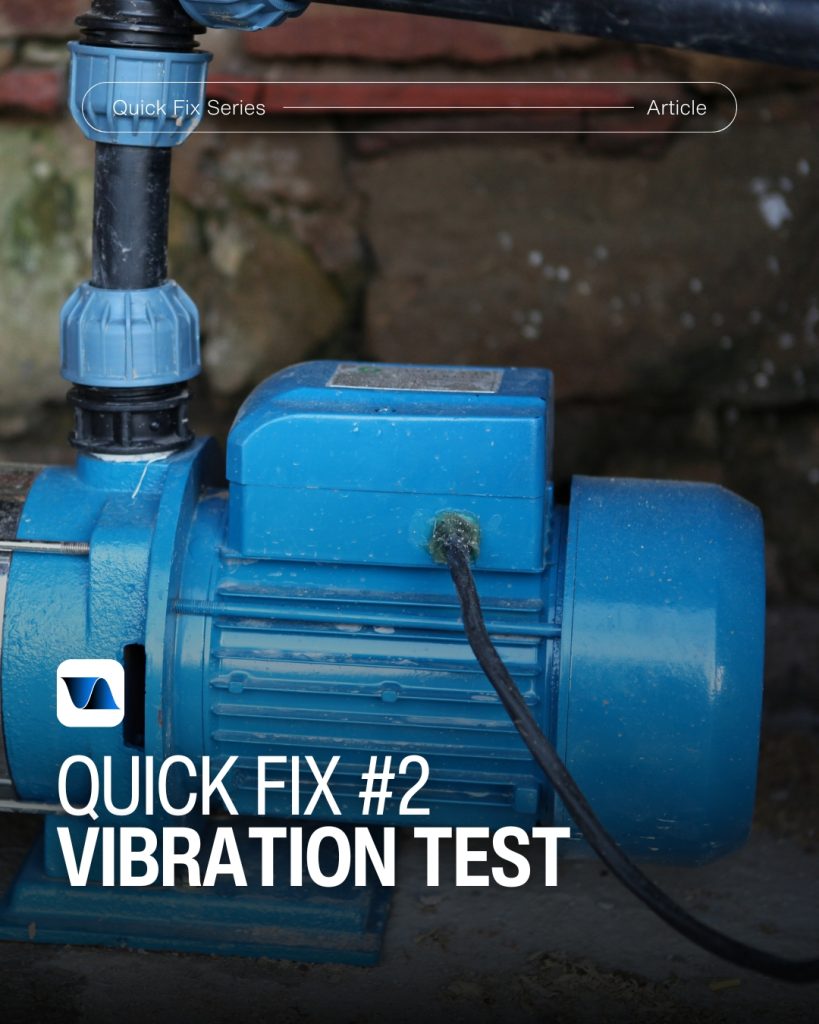
You know the silent dread. That unsettling hum or subtle rattle from an electric motor – the kind that whispers of trouble brewing beneath the surface. For technicians, electricians, and drive integrators like you, ignoring these cues isn’t an option. Because when an electric motor vibrates excessively, it’s not just a minor annoyance; it’s shouting a dire warning. And if you don’t listen to the signs, your operations could soon be put into a halt.
An unexpected motor breakdown isn’t just an inconvenience. It’s a series of costly headaches:
- Production Halts: Critical lines grinding to a standstill, leading to immediate revenue loss.
- Emergency Repairs: Scrambling for parts, paying premium rates for expedited shipping and after-hours technician call-outs.
- Collateral Damage: A failing motor can take out bearings, shafts, or even adjacent equipment, multiplying repair costs exponentially.
- Safety Risks: Uncontrolled vibration can lead to components detaching, structural damage, or even fire, putting your team in harm’s way.
The financial fallout is staggering. While our “Visual Check” article highlighted the hourly costs of downtime, a motor failure, particularly one preceded by ignored vibration, often escalates these figures significantly due to the specialized nature of the repair and the cascading damage. You’re not just losing production; you’re often facing major capital expenditure on new motors or extensive overhauls.
Uncontrolled Vibration: The True Cost ignoring vibration accelerates wear, turning minor issues into major overhauls.
| Problem | Initial Cost (Estimated) | Escalated Cost (If Ignored) |
| Minor Unbalance | $100 (balancing weights) | $5,000 (bearing replacement), $20,000+ (shaft damage, motor overhaul, downtime) |
| Slight Misalignment | $500 (precision alignment) | $10,000+ (coupling replacement, motor/driven equipment bearing failure, shaft damage, energy waste, downtime) |
| Early Bearing Wear | $200 (re-greasing, minor seal) | $3,000 (bearing replacement), $15,000+ (motor winding damage from heat, shaft damage, catastrophic failure, extensive downtime) |
Imagine this scenario: A critical pump motor, vital for your cooling system, starts exhibiting a slight but noticeable vibration. It’s not loud, just a subtle tremor. A seasoned technician, during a routine round, notices this. Instead of dismissing it, they perform a quick vibration check with a handheld meter. The reading is elevated at the non-drive end. Armed with this early data, maintenance schedules a deeper dive during the next planned shutdown. They discover a worn bearing just before it seizes. A planned bearing replacement, costing a few hundred dollars, averts a full-blown motor burnout, saving days of unexpected downtime, thousands in emergency repairs, and safeguarding the entire cooling system. This quick vibration check didn’t just save a motor; it saved days of downtime, production losses, and the intense pressure of a critical system failure.
Beyond the Visual: While your eyes are the first line of defense, knowing how to conduct a basic vibration test is your next, crucial step. It’s about moving from “I see a problem” to “I know what kind of problem it is.” This guide empowers you to interpret those subtle shakes before they become major headaches.
Your ability to quickly assess vibration levels and patterns will transform you from a reactive troubleshooter to a predictive maintenance expert. You’ll gain:
- Confidence in Diagnosis: No more guessing games. Vibration data gives you clear, actionable insights.
- Proactive Control: Schedule maintenance on your terms, not the motor’s.
- Cost-Saving Power: Identify issues early, preventing costly secondary damage and extensive repairs.
- Reputation: Be the go-to person who anticipates and prevents problems, keeping the plant running smoothly.
The Language of Vibration: Vibration analysis is the science of understanding mechanical oscillations. For electric motors, specific vibration patterns are direct indicators of common mechanical and electrical faults. You don’t need to be a vibration expert to understand the basics for a “Quick Fix.”
Key Vibration Frequencies & What They Reveal (Quick Fix Diagnostics): When you use a vibration meter, you’re primarily looking at the amplitude (how much it’s vibrating) and the frequency (how often it’s vibrating). These frequencies, especially in relation to the motor’s running speed (RPM), are your diagnostic clues.
- High Vibration at 1x RPM (Running Speed):
- The Message: “I’m off-balance!” or “My shafts aren’t quite lined up.”
- Causes:
- Unbalance: Uneven weight distribution in the rotor, fan, or coupling. Often high in the radial (horizontal/vertical) direction.
- Misalignment: Motor shaft not perfectly in line with the driven equipment shaft. Can be high in radial and significant in axial (along the shaft) directions.
- Bent Shaft: Similar to misalignment but intrinsic to the shaft itself.
- Quick Interpret: If radial vibration at 1x RPM is dominant, suspect unbalance or misalignment. If axial vibration is also high, it strongly points to misalignment.
- High Vibration at 2x RPM (Twice Running Speed):
- The Message: “I’m severely misaligned!” or “I’m loose somewhere!”
- Causes:
- Misalignment (more severe): Angular or offset misalignment often generates a strong 2x RPM component.
- Mechanical Looseness: Loose mounting bolts, soft foot, cracked frame, or worn bearings can cause peaks at 2x and even 3x RPM.
- Quick Interpret: A prominent 2x RPM peak, especially if axial, often screams misalignment. Also, check for any looseness immediately.
- High Frequency Vibration (Non-Synchronous Peaks, “Hump”):
- The Message: “My bearings are in trouble!”
- Causes:
- Bearing Defects: Worn raceways, pits, brinelling, or inadequate lubrication in rolling element bearings. Produces high-frequency noise that isn’t directly related to RPM.
- Quick Interpret: Listen for grinding or sizzling sounds. Feel for excessive heat. If your meter shows a broad hump of high-frequency energy, suspect bearing damage.
- Vibration at 2x Line Frequency (e.g., 120 Hz for 60 Hz power):
- The Message: “I have an electrical problem!”
- Causes:
- Rotor Bar Issues: Cracked or broken rotor bars in induction motors.
- Stator Problems: Shorted turns or lamination issues.
- Uneven Air Gap: Causes magnetic pull variations.
- Quick Interpret: Often presents as a distinct growl or hum. Can be confirmed with current analysis, but the vibration pattern is a strong indicator.
Your Quick Fix Vibration Test: You don’t need a complex spectrum analyzer to start identifying critical vibration issues. A reliable handheld vibration meter and a systematic approach can provide immediate, actionable insights.
Tools You’ll Need:
- Handheld Vibration Meter: (Measures overall RMS velocity in mm/s or in/s and often acceleration for high-frequency issues).
- Magnetic Base or Stinger Probe: For consistent contact.
- Infrared Thermometer: To check for hot spots.
- Wrench Set/Socket Set: For checking mounting bolts.
- Pen and Paper/Tablet: For recording readings and observations.
- Proper PPE: Safety glasses, hearing protection, gloves.
The 5-Step Quick Fix Vibration Check:
- Prioritize Safety (Your Top Priority!):
- LOTO (Lockout/Tagout): If you need to physically inspect or tighten anything, ensure the equipment is de-energized and locked out.
- Safe Proximity: Maintain a safe distance from rotating shafts, couplings, and fans.
- PPE: Always wear appropriate personal protective equipment.
- Visual Confirmation & Baseline (Connecting to “Quick Fix Step 1”):
- Before touching the meter, revisit your visual inspection. Has anything changed since the last check?
- Confirm any unusual noises, smells, or visible shaking from your “eyes-on” assessment. This context is invaluable for interpreting meter readings.
- Strategic Measurement Points (Where to Put Your Sensor):
- Consistency is Key: Always measure at the same points and in the same directions for trending.
- Bearing Housings: These are critical. They transmit vibration from the shaft and internal components.
- Directions: Measure in three directions at each bearing:
- Horizontal (H): Perpendicular to the shaft, parallel to the mounting surface.
- Vertical (V): Perpendicular to the shaft, perpendicular to the mounting surface.
- Axial (A): Parallel to the shaft.
- Recommended Points:
- Drive End (DE) Motor Bearing: H, V, A
- Non-Drive End (NDE) Motor Bearing: H, V, A
- (If Applicable) Driven Equipment Bearing (closest to coupling): H, V, A
- Take Readings & Apply the Severity Chart:
- Steady Contact: Ensure your sensor (magnetic base or stinger) has firm, consistent contact with the measurement point.
- Record Data: Note down the overall RMS velocity reading (mm/s or in/s) for each point and direction.
- Compare to ISO 10816-3 (General Industrial Machines): This international standard provides guidance on vibration severity for various machine types. For general industrial machines (Group 2, rigid foundation):
- Excellent: Below 1.1 mm/s (0.04 in/s) RMS
- Good: 1.1 – 2.8 mm/s (0.04 – 0.11 in/s) RMS
- Satisfactory: 2.8 – 7.1 mm/s (0.11 – 0.28 in/s) RMS (Monitor closely, plan action)
- Unsatisfactory: 7.1 – 18 mm/s (0.28 – 0.71 in/s) RMS (Requires urgent action)
- Unacceptable: Above 18 mm/s (0.71 in/s) RMS (Potential for immediate shutdown, or already in critical condition)
- Look for Dominant Directions:
- If radial (H or V) vibration is highest, suspect unbalance, misalignment, or looseness.
- If axial (A) vibration is highest, strongly suspect angular misalignment or a bent shaft.
- Initial Troubleshooting & Action (The “Quick Fix”):
- Elevated 1x RPM (Radial) & Suspect Unbalance:
- Action: Visually inspect rotor/fan for debris buildup. Check for missing balance weights if applicable.
- Quick Fix: Clean off any obvious buildup.
- Elevated 1x & 2x RPM (Axial & Radial) & Suspect Misalignment:
- Action: Verify motor-to-driven equipment alignment visually. Check coupling bolts and wear.
- Quick Fix: While precise alignment requires specialized tools, check for gross misalignment by eye (e.g., visible gap or offset).
- High Frequency/Roughness at Bearings:
- Action: Listen for grinding or sizzling sounds. Feel bearing housing for excessive heat (use IR gun).
- Quick Fix: Check bearing lubrication levels. If safe, and appropriate for the bearing type, add grease (avoid over-greasing). If rough or hot, schedule bearing replacement soon.
- High Vibration Everywhere / “Wobbling” & Suspect Mechanical Looseness:
- Action: Check all motor mounting bolts, baseplate integrity, and look for “soft foot” (where one foot of the motor is not making firm contact with the base).
- Quick Fix: Tighten all accessible bolts. If soft foot is identified, plan for shimming.
- Vibration at 2x Line Frequency & Suspect Electrical Issues:
- Action: Listen for a distinct growl or humming sound from the motor. Observe motor current if possible.
- Quick Fix: Visually inspect electrical connections for looseness or signs of overheating.
- Elevated 1x RPM (Radial) & Suspect Unbalance:
Vibration Cues: Your Motor’s Diagnostic Checklist
| Vibration Cue | Primary Cause | What to Look For (Visual/Sound) | Quick Fix Action (If Applicable) |
| High 1x RPM (Radial) | Unbalance | Visual rotor/fan debris, rhythmic thump/shake. | Clean fan/rotor, check for missing weights. |
| High 1x & 2x RPM (Axial) | Misalignment | Coupling wear, motor/driven equipment visibly not level or offset. | Check coupling bolts, confirm gross alignment. |
| High Frequency (Rough) | Bearing Wear | Grinding/squealing noise, excessive heat from bearing housing. | Check lubrication, listen for distinct bearing noises. |
| High 2x RPM (Variable) | Mechanical Looseness | Loose mounting bolts, cracked feet, motor “rocking” on base. | Tighten all accessible bolts, check base rigidity. |
| 2x Line Freq. (Humming) | Electrical Problems | Distinct growl, motor current fluctuations, unusual electrical hum. | Visually inspect connections, listen for electrical hum. |
The Unseen Benefits: Mastering this Quick Fix Vibration Test offers substantial benefits, empowering you to control your plant’s reliability:
- Massive Cost Savings: Prevent catastrophic failures that require expensive emergency repairs and new equipment. Catching issues early means a cheaper, faster fix.
- Maximized Motor Lifespan: Proactive identification and correction of vibration issues dramatically extend the operational life of your motors, protecting your capital investments.
- Reduced Unplanned Downtime: No more being surprised by sudden breakdowns. You gain the power to schedule maintenance during planned shutdowns, minimizing production losses.
- Enhanced Operational Efficiency: Reliable motors mean consistent performance, higher throughput, and smoother operations, directly impacting your plant’s profitability.
- Boosted Safety: Identifying mechanical flaws early prevents components from failing unexpectedly, ensuring a safer work environment for everyone.
Trusted by Technicians: Just like visual checks, vibration testing is a foundational skill for experienced maintenance professionals. While advanced analysis provides deep insights, your ability to conduct a basic test and interpret key patterns is invaluable for rapid troubleshooting and preventing escalating problems. Major industry bodies like ISO, API, and the Vibration Institute all emphasize the critical role of vibration analysis in comprehensive predictive maintenance programs. This isn’t just theory; it’s proven practice on thousands of industrial sites.
Ready for Continuous Reliability? Mastering the Quick Fix Visual Check and now the Quick Fix Vibration Test are your foundational steps to transforming reactive maintenance into proactive power. By understanding these two vital “languages” your equipment speaks, you’re not just fixing problems; you’re selling possibilities – possibilities of uninterrupted production, extended equipment life, and a safer, more efficient workplace.
Up Next in the Series: Filter Installation
Don’t underestimate the power of a clean filter! It’s not just about preventing clogs, it’s about optimizing performance, reducing energy consumption, and protecting critical components. We’ll show you how to swap them out like a pro.