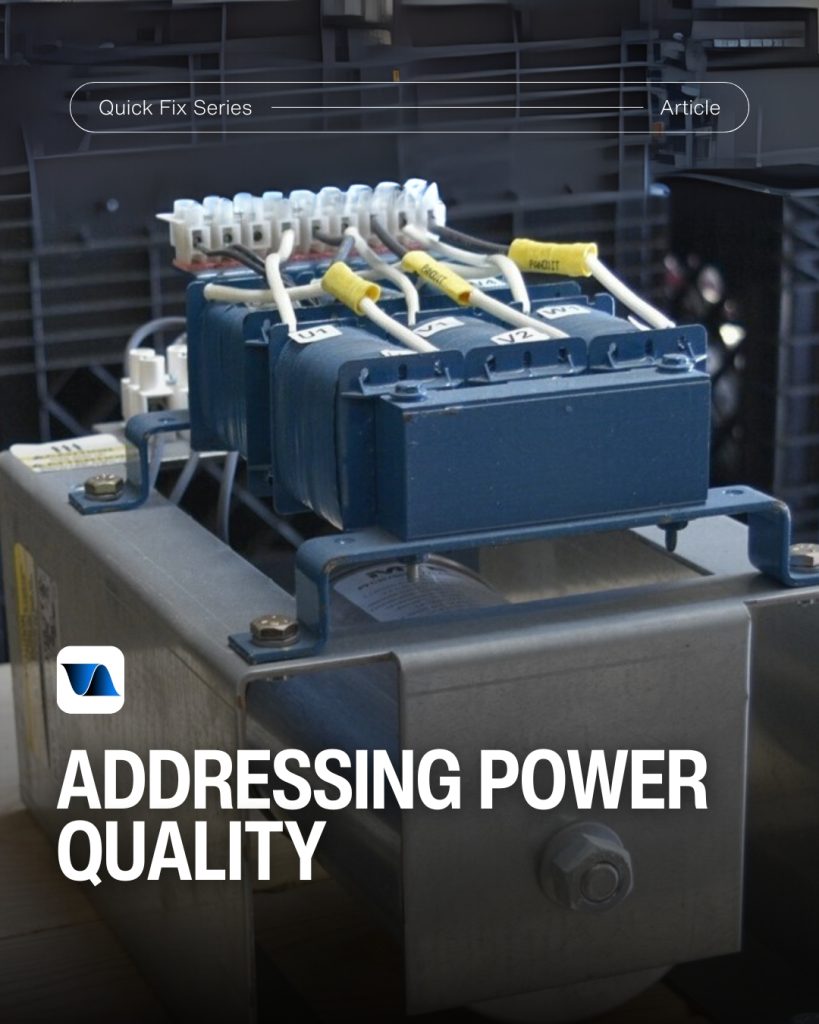
For technicians and electricians, the hum of machinery and the glow of indicator lights often signal smooth operation. But beneath the surface, a silent threat can be at play, steadily eroding the lifespan of critical equipment and impacting your bottom line: poor power quality, especially harmonic distortion. This isn’t just about stable voltage; it’s about the very consistency and reliability of the electrical supply that keeps your plant running.
What Exactly is Power Quality?
Think of power quality as the “health” of your electrical supply. It’s not just about whether the lights are on, but about ensuring the electrical current is clean, consistent, and free from disruptive anomalies. These anomalies, often invisible without specialized tools, include:
- Voltage Sags and Swells: Brief drops or increases in voltage.
- Interruptions: Complete loss of power.
- Unbalance: Unequal voltage or current in a three-phase system.
- Transient Voltages and Currents: Short, high-energy bursts.
- Harmonic Distortion: The focus of this article, and arguably the most dangerous.
The Pervasive Problem of Harmonics in Modern Factories
Harmonics are essentially unwanted voltage or current frequencies that distort the pure 50/60 Hz sine wave of your electrical supply. Imagine a smooth, rhythmic heartbeat suddenly being interrupted by erratic extra beats – that’s what harmonics do to your power. These distortions are primarily generated by “non-linear loads,” which draw power in pulses rather than a smooth, continuous flow.
In today’s industrial facilities, non-linear loads are everywhere:
- Variable Frequency Drives (VFDs): Essential for precise motor control in applications like pumps and conveyors, VFDs are a major source of harmonics if not properly filtered.
- Uninterruptible Power Supplies (UPS) systems: Both older and newer generations can introduce harmonics.
- Energy-efficient lighting: CFLs and LED lighting contribute to harmonics and can lead to a low power factor.
- Office equipment: PCs, copiers, and printers, with their power electronics, also draw non-sinusoidal currents.
- Transformers: Even these critical distribution components can contribute through core saturation.
How Harmonics Secretly Damage Your Equipment
The presence of harmonics isn’t just an electrical anomaly; it’s a direct attack on your industrial equipment. Here’s how it causes degradation:
- Increased Heating and Losses: Harmonic currents generate additional heat in electrical machines. This excess heat rapidly degrades the insulation of windings, significantly shortening equipment lifespan. A mere 10°C increase in operating temperature can effectively halve the winding insulation life. This isn’t a sudden failure but a silent, cumulative degradation that often gets mistaken for “old equipment” or “nuisance trips.”
- Mechanical Stress and Vibrations: Harmonics create torque pulsations in motors, leading to mechanical vibrations that accelerate wear on bearings, shafts, and other mechanical components. Negative sequence harmonics are particularly notorious for causing significant mechanical stress. Distorted current flow also stresses windings and heats conductors, leading to premature winding failure.
- Reduced Efficiency and Derating: Harmonic currents don’t contribute to useful work, leading to higher energy consumption and increased operational costs. To prevent damage, electrical machines often need to be derated, meaning they operate below their designed capacity, impacting productivity and financial performance.
- Electromagnetic Interference (EMI): Poor power quality can disrupt sensitive control and automation systems, reducing production efficiency and reliability. It can even interfere with critical telemetry and communication devices like Wi-Fi.
- Nuisance Tripping: Harmonics frequently cause fuses and circuit breakers to trip unexpectedly, leading to disruptive and unplanned shutdowns.
The Broader Impact: Beyond the Shop Floor
These technical issues don’t stay confined to your equipment; they cascade into significant operational inefficiencies and economic losses:
- Frequent Breakdowns and Increased Maintenance Costs: More repairs, more parts, and more technician time.
- Reduced Equipment Lifespan: Replacing critical assets far sooner than anticipated impacts your Capital Expenditure (CAPEX).
- Unplanned Downtime: Directly translates to lost production, lower revenue, and increased material waste. Even an hour of downtime can be incredibly costly for large industries.
- Hidden Costs: Increased energy consumption, higher cooling costs due to overheating, and reduced overall productivity.
- Regulatory Non-Compliance: Can lead to financial penalties, legal action, increased insurance costs, and damage to your company’s reputation. This elevates power quality from a purely electrical engineering concern to a critical business risk.
MTE’s Matrix AP Passive Harmonic Filters: Your Robust Solution
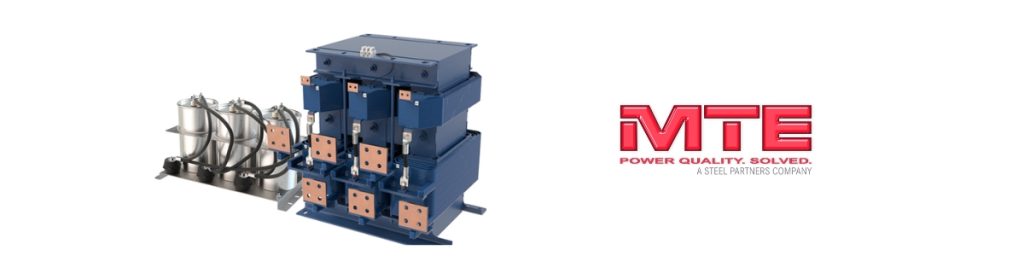
So, what’s the answer to this hidden threat? Advanced harmonic mitigation. Let’s look at MTE’s Matrix AP filters, a leading solution designed to protect your assets.
Adaptive Passive Technology Explained
Traditional passive filters often struggle at lower power loads, performing optimally only at 100% capacity. This is a significant limitation in industrial settings where loads constantly fluctuate. The MTE Matrix AP addresses this with its patented Adaptive Passive Technology.
This innovative technology allows the filter to dynamically adjust its impedance in response to changing loads. It presents the highest impedance at light loads and the lowest impedance at maximum loading, ensuring consistent harmonic mitigation across a wide operating range.
Key design advantages include:
- Single Reactor Design: Integrates both input and shunt coils on the same core, simplifying installation and reducing cabling requirements and costs.
- Reduced Heat Generation: This intelligent design generates less heat than traditional filters, eliminating the need for cooling fans in enclosed units. This removes a common point of failure and reduces maintenance.
- Consistent Mitigation: Provides reliable harmonic mitigation across the actual operating range of a factory, not just at peak load, leading to more predictable ROI.
Superior Performance for Real-World Applications
The MTE Matrix AP filter delivers exceptional technical performance:
- Low Total Harmonic Current Distortion (THID): Consistently achieves 5% THID at full load and maintains this performance down to 40% of full load current, guaranteeing less than 8% THID at 30% load.
- IEEE 519 Compliance: Crucially, it enables systems to meet the stringent IEEE 519 standard for harmonic distortion at the point of common coupling, preventing your facility’s emissions from impacting the public power system.
- High Efficiency: Stands alone with an efficiency exceeding 99% throughout its load range, significantly contributing to overall system efficiency.
- Power Factor Improvement: Substantially enhances the true power factor, meeting leading power factor requirements of most electrical providers at loads as low as 22.5% of full load current.
- Generator Compatibility: Its low kVAR ratio makes it “generator friendly” for seamless integration.
- Robustness in Degraded Conditions: Adapts effectively to scenarios with up to 3% phase voltage imbalance or background harmonics with minimal performance degradation.
- Certifications and Warranty: UL, cUL, and CE listed, backed by an industry-leading three-year warranty.
Tangible Benefits for Your Operations
Deploying MTE Matrix AP passive harmonic filters delivers substantial, measurable benefits far beyond mere regulatory compliance:
- Extended Equipment Service Life: By virtually eliminating Counter-Electromotive Force (CEMF) and the skin effect, the Matrix AP significantly prolongs the operational life of critical assets like transformers and motors. Research indicates an increase in equipment lifespan by up to 30%, leading to substantial savings in replacement costs.
- Reduced Unplanned Downtime and Nuisance Tripping: Prevents blown fuses and tripped circuit breakers, minimizing equipment failures and operational disruptions, directly translating into increased productivity and annual savings.
- Improved Energy Efficiency and Power Factor: Filtering out harmful harmonics and improving power factor reduces energy losses, leading to lower energy consumption and significantly reduced operational costs. Case studies have shown direct energy savings, with one example demonstrating a 12.7% direct energy savings tied to passive neutral harmonic filter installation.
- Ease of Installation and Maintenance: Passive filters are generally “Plug and Play.” MTE’s unique design reduces cabling and connections, and the fan-less design minimizes maintenance. An optional bypass contactor allows the drive to continue operation even if the filter needs servicing, ensuring uninterrupted production.
These filters aren’t just a compliance tool; they are a strategic investment that fundamentally improves a plant’s bottom line and long-term sustainability, making them a critical component of a proactive industrial maintenance and energy management strategy.
Bridging the Gap: Power Quality Insights from Your Maintenance Checks
This is where the rubber meets the road. The theoretical impacts of poor power quality directly link to the practical, observable symptoms you already look for during routine maintenance. Your Visual Motor Check and Vibration Test Guide are invaluable early warning systems.
Quantifying the Value: Energy Savings, Reduced Maintenance, and Enhanced Productivity
Investing in harmonic filters like MTE Matrix AP offers a substantial and multifaceted Return on Investment (ROI):
- Direct Energy Savings: Reduces energy losses from harmonic distortion and improves overall system efficiency, lowering utility bills.
- Reduced Maintenance Costs: Significantly reduces wear and tear on electrical components, minimizing the frequency of repairs and replacements, and extending the lifespan of critical assets by up to 30%.
- Increased Uptime and Productivity: Minimizes equipment failures, nuisance tripping, and unplanned downtime, leading to higher production rates and improved output quality.
- Optimized Capital Expenditure: Improved power quality allows equipment to perform at its best, potentially reducing the need for oversizing and increasing transformer loading capability, deferring or eliminating costly infrastructure upgrades.
- Environmental Benefits: Lower carbon footprint associated with energy production, aligning with corporate environmental responsibility goals.
The ROI of MTE filters extends far beyond direct energy cost reductions. It encompasses avoided costs of unplanned downtime, reduced equipment replacement cycles, mitigated regulatory fines and legal liabilities, and preserved brand reputation.
Conclusion: Safeguarding Your Industrial Assets
The pervasive and often hidden impact of poor power quality, particularly harmonic distortion, represents a significant threat to the operational integrity and financial viability of industrial facilities. These electrical problems degrade equipment through increased heating, mechanical stress, insulation breakdown, and reduced efficiency.
As technicians and electricians, you are on the front lines of identifying these issues. By understanding the link between observable symptoms (like overheating and vibration) and underlying power quality problems, and by leveraging advanced solutions like MTE’s Matrix AP passive harmonic filters, you can move beyond reactive repairs. This proactive approach protects industrial assets, ensures sustainable and profitable operations, and future-proofs your facility against the complexities of modern industrial power systems.
Are you ready to take a closer look at your facility’s power quality and protect your valuable equipment?